

How to find a rewarding job in Canada as recent graduates can be challenging but rewarding after graduating from a Canadian college or university. It is an exciting milestone, but for many recent graduates in Canada, the next challenge is finding a job. After a day-night hard work for assignments, projects, or presentations, the transition from student life to the workforce can be overwhelming. Recent graduates go through a series of struggles, stresses, and frustrations while they land on the job search journey.
As a recent graduate, you may feel blank about where to start, but with a strategic approach, persistence, and the right resources, you can successfully find your first job in Canada. Understanding the competitive job market, refining your application materials, and leveraging networking opportunities can substantially improve your chances of employment. In this post, we will break down essential steps and actionable tips to help you navigate the Canadian job market effectively.
What you will find on this page
- How to Build an Effective Canadian-Style Resume
- Top Professional Resume Assistance Resources in Canada
- Top Job Search Websites in Canada/Leverage Online Job Portals
- Networking as a Powerful Tool and How to Use LinkedIn Effectively
- Why Internships and Co-op Programs Matter
- How to Prepare for Job Interviews Effectively

How to Build an Effective Canadian-Style Resume
Before beginning your job search, it is unavoidable to prepare a well-structured resume that effectively highlights your skills, experience, and academic qualifications. Because your resume plays a significant role in making a first impression about you on hiring managers. Given the competitive nature of the job market, hiring managers often spend just a few seconds (5 to 10 seconds) on their resume to determine if a candidate is suitable for an interview or pre-screening test.
Since hiring managers review hundreds of applications for a single position, standing out is crucial. To increase your chances of success, it is inevitable to be proactive, stay informed about the modern job market, and follow the right pathway when preparing a resume. Here’s how to make your resume and cover letter stand out:
Top Actionable Tips for Your Effective Resume:
- Conduct research using online resources such as YouTube tutorials, ChatGPT, and Google Search to understand effective resume formats and structures
- Keep your resume concise, ideally no longer than 2 pages
- Use reader’s friendly Front Styles such as Calibri or Arial to enhance readability and engagement
- Emphasize relevant skills and accomplishments rather than simply listing job duties.
- Remove outdated positions, irrelevant experiences, and generic soft skills to maintain a focused and impactful resume.
- Customize your resume (ATS friendly) for each job application by aligning relevant keywords with the job description. Many employers use Applicant Tracking Systems (ATS) to screen resumes, so optimizing your information and formatting is crucial for increasing your chances of being shortlisted.
- Use powerful action verbs like Managed, Coordinated, or Developed to showcase your achievements effectively, not just responsibilities.
- If you need professional guidance in crafting a strong resume, consider reaching out to career support organizations such as the Regina Open Door Society, the University of Regina, or SaskJobs, where expert resume writers can help tailor your resume to highlight your skills and experience.
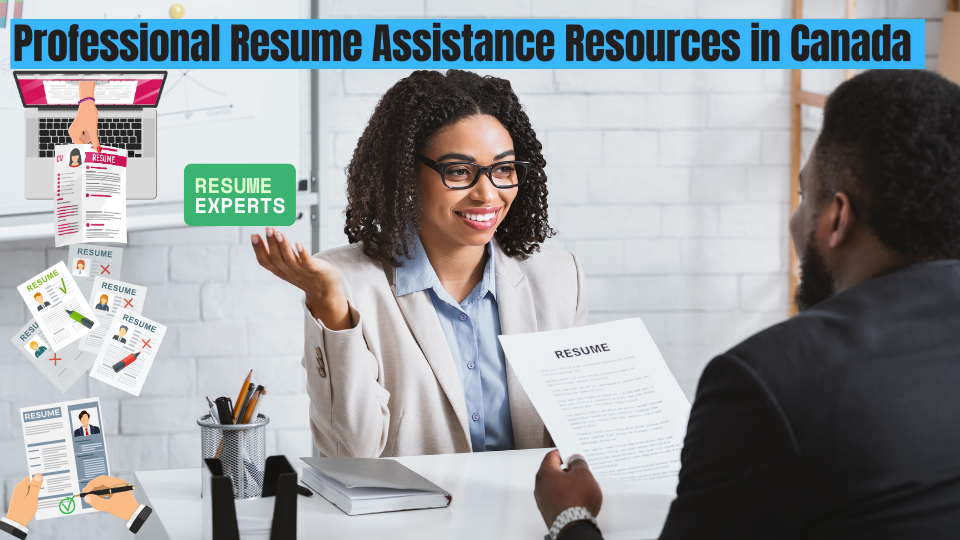
Top Professional Resume Assistance Resources in Canada
In Canada, recent graduates can access professional resume-writing support through various organizations and career services. Here are some key resources:
- Government-Funded Employment Centers:
- Canada Job Bank provides resume-building tools and career resources
- Employment Ontario offers free resume workshops and career counseling. Make an appointment with an employment counselor via email, phone, or live chat
- WorkBC provides career services, job postings, and resume guidance for British Columbia residents
- Alberta Works supports job seekers with resume development and job search strategies
- SaskJobs provides resume-writing services to Saskatchewan residents including Regina and Saskatoon
Make an appointment with an employment counselor of the organization via email or phone, and seek guidance on your effective resume writing.
- University & College Career Centers:
Most post-secondary institutions in Canada have career services that provide one-on-one resume reviews, workshops, and career counseling.
Examples include:
- University of Toronto Career Centre
- UBC Centre for Student Involvement & Careers
- McGill Career Planning Service (CaPS)
- University of Regina: Centre for Experiential and Service Learning (CESL)
- Non-Profit Organizations Supporting Job Seekers:
- YMCA Employment Services offers resume-building and job search workshops. There are over 1,000 YMCA locations across Canada including in Regina, Saskatchewan that offer a variety of YMCA Programs and Services.
- ACCES Employment specializes in helping newcomers and graduates with job search strategies including resume and cover letter writing.
- Career Edge provides internships and career coaching for graduates.
- Local Job Support Centers (City-Based Services):
These organizations offer free resume-writing assistance, career coaching, and job search support to help graduates and job seekers transition into the workforce successfully.
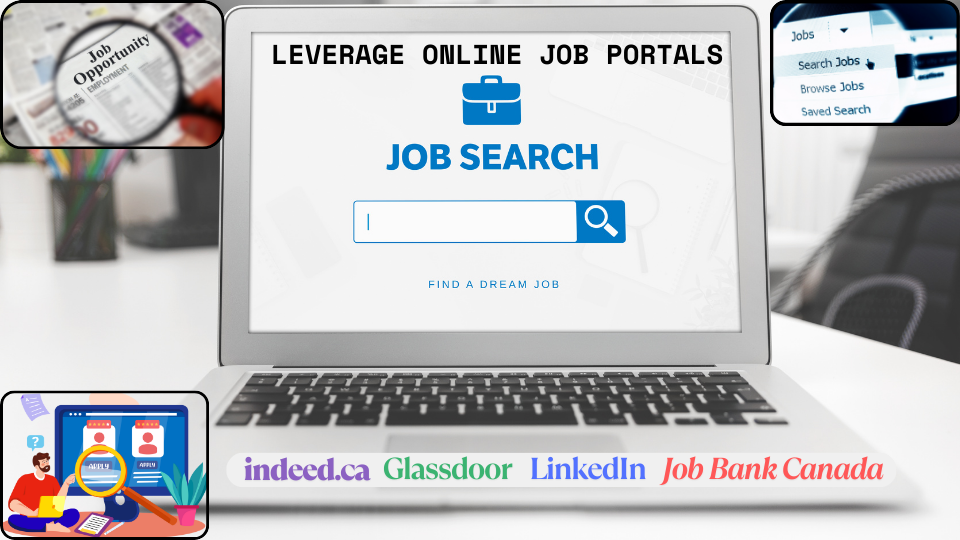
Top Job Search Websites in Canada/Leverage Online Job Portals
Do not overlook the importance of Job Boards in your job search strategy. Although they may seem traditional, many modern job boards are now sophisticated platforms equipped with advanced search features and the ability to create job alerts based on your preferences. Use these features to find new job openings that match your skills and experience. To increase your chances of success, apply promptly and customize each application to match the specific job requirements by making a strong impression on hiring managers. Many employers in Canada post job openings on various online platforms. As a job seeker, you can consider using these Job Boards:
Job Boards for Provincial Government Jobs
- Government of Saskatchewan Jobs
- Government of Alberta Jobs
- Government of Ontario Jobs
- Government of British Columbia
- Government of Manitoba Jobs
Job Boards for Canadian Public University Jobs
- University of Regina Jobs
- University of Saskatchewan Jobs
- University of Alberta Jobs
- University of Calgary Jobs
- University of British Columbia Jobs
- University of Toronto Jobs
- University of Manitoba Jobs
Create an account and set up job alerts to receive notifications about new job postings that match your skills and preferences.

Networking as a Powerful Tool and How to Use LinkedIn Effectively
In today’s competitive job market, networking can be a powerful tool to increase your chances of landing your dream job. While networking is crucial in the Canadian job market, online platforms offer vast opportunities to connect with like-minded professionals. Therefore, creating a compelling LinkedIn profile to showcase your skills, experience, qualifications, and achievements is essential. Build meaningful connections by becoming part of relevant groups, contributing to discussions, and actively reaching out to your professional network. Remember, networking isn’t just about asking for a job, it’s about building relationships that can provide support, advice, information, and potential job leads.
Here’s how you can utilize LinkedIn platforms and resources to enhance your job search
- Connect with professionals in your field on LinkedIn.
- Join relevant LinkedIn groups and participate in discussions with like-minded individuals.
- Attend career fairs and networking events that provide an excellent opportunity to meet new people and expand your network beyond your current circle of contacts. Do not hesitate to introduce yourself to others at the events or be afraid to initiate a conversation with strangers. Because, you never know where these new connections may lead, (Anushka, 2024).
- Reach out to alumni from your university who work in your desired industry. You can seek mentorship or ask for networking opportunities that can be incredibly beneficial in enhancing your skill set.
- Follow the organizations/companies where you would like to work. A great way to stay informed about job opportunities and industry trends is by following companies on social media and subscribing to their newsletters. This keeps you updated on job openings, company news, and insights into their culture, values, and ongoing projects, (Anushka, 2024). Engaging with their content can also showcase your genuine interest. Additionally, many organizations use social media to share job postings and recruitment events, giving you early access to potential opportunities.
- Turn on the “#OpenToWork” badge on your LinkedIn profile. LinkedIn offers an “#OpenToWork” badge that helps you signal to recruiters and hiring managers that you are actively looking for a job. According to LinkedIn, users with this badge are more likely to receive messages from recruiters and appear in hiring managers’ searches. Enabling this feature can enhance your visibility to potential employers, increasing your chances of securing your next job opportunity, (Anushka, 2024).

Why Internships and Co-op Programs Matter: How to Find a Rewarding Job in Canada as Recent Graduates
If you lack work experience in your field, considering internships and co-op programs is a great way to gain industry-specific skills. Many companies hire interns and later offer them full-time positions.
- Check if your university offers post-graduate Internships or Co-op programs. Most post-secondary institutions in Canada have career services that provide one-on-one career counseling or job coaching. Find any Internship or Co-op program opportunities within the university or other organizations that are partnered with the university. Career Counselor of the university helps you to arrange co-op programs. Do not hesitate to contact them. Remember, your comfort zones are the biggest enemy in your career journey. It is important to be confident, proactive, and stay informed.
- Seek Summer Job opportunities on the provincial government website. Many ministries of the provincial government offer current students or recent graduates Summer Jobs or term job opportunities. Be active by visiting their website or LinkedIn page to get recent job postings. It is a smart idea to reach out to the Staffing team via email, asking for information about summer job opportunities.
- Apply for Government-Funded Job Placement, such as the Career Bridging Program (CPB) from the Regina Open Door Society which is offered in various provinces of Canada. In today’s fast-paced and competitive job market, continuously expanding your professional skills and knowledge is essential for success. Contact the Provincial Ministry of Career Training for guidance about the Career Bridging Program.
- Apply for Volunteering and Internship opportunities at the Government of Canada website. The program allows recent graduates to apply their knowledge, gain work experience, and develop skills in various sectors. Volunteering opportunities are a significant milestone for graduates that help to obtain substantial knowledge and enhance their ability to land in corporate life.

How to Prepare for Job Interviews Effectively
Whether you are in your early, mid, or late career, a job interview is one of the most nerve-wracking experiences. Once you get shortlisted, preparing for an interview is crucial to reduce stress and increase your chances of success. To make sure you’re well-prepared, follow these top 5 tips on how to interview well.
Top 5 Interview Tips:
- Know the Organization and Industry in advance: Research the company and the industry using the company website and external sites. Attending panels and career fairs allows you to connect directly with company representatives and professionals in the industry. The most important things to research are the company’s history, mission, vision, values, recent press releases, management team, reputation, and financial information (if public). If you have thoroughly researched these areas, you will be able to engage in meaningful and insightful conversations during the interview and confidently ask questions about the company.
- Know Yourself and How You Fit with The Position: It is important to understand employers’ top priorities by closely observing the job description and requirements. Figure out what specific skills (for example: accounting skills, Microsoft Office Excel skills, editing skills), experience (e.g., Administrative Assistant, Payroll Administrator, Accounting), and education the employer is seeking. Understand what transferable skills (e.g., communication, time management, leadership) have you developed in your experience so that you can relate to the position.
- Prepare Answers to a List of Interview Questions: There are common types of interview questions that fall into several categories: open-ended, behavioral, and situational. Here are some sample questions to help you prepare. Be prepared to answer related to the job description and requirements. Use specific examples in your responses to highlight your skills and reinforce the key points you are making about your qualifications. Use the STAR technique (Situation, Task, Action, Result) to structure your answers to behavioral questions and make them complete.
- Prepare Questions for Your Interviewer: Do not forget to prepare 3-5 questions to ask the employer at the end of your interview. It is common practice for one of the last questions in an interview to be “Do you have any questions for us? Here are some sample questions to help you prepare. Your prepared questions not only showcase your preparation and interest for the role and company but also allow you to learn more about the company beyond what’s in a job description or website.
- Practice, Practice, Practice: Practice helps you become more confident and can help you become more comfortable by expressing how your background makes you an ideal candidate.
Finding a job as a recent graduate in Canada requires a combination of a strong resume, networking, persistence, and continuous skill development. By following these strategies, you can increase your chances of landing a job that aligns with your career goals. Stay proactive, use available resources, and keep applying for your ideal job is out there.
Frequently Asked Questions(FAQs)
1. What is the best way for recent graduates to network when looking for a job in Canada?
Networking is essential for finding job opportunities in Canada. Recent graduates can attend career fairs, connect with alumni from their college or university, and reach out to professionals on LinkedIn. Informational interviews are also a great way to build connections and learn about industry trends. Additionally, joining industry-specific groups or associations can help increase your visibility and expand your network.
2. Are internships and co-op programs important for recent graduates in Canada to secure a job?
Yes, internships and co-op programs play a vital role in helping recent graduates gain relevant experience, develop industry-specific skills, and build a professional network. Many Canadian employers prefer candidates with hands-on experience, and internships often lead to full-time positions. It’s advisable to seek out these opportunities during your academic years or even after graduation.
3. How can recent graduates stand out from other candidates in Canada’s competitive job market?
To stand out, recent graduates should focus on customizing their resume and cover letter to highlight skills that match the job description. It’s also helpful to have a strong online presence, including a polished LinkedIn profile that demonstrates your skills and achievements. Additionally, acquiring certifications or taking short courses in your field can show employers that you’re proactive and committed to professional growth.
4. How important is it to tailor your resume for each job application in Canada?
Tailoring your resume for each job application is crucial in Canada. Many companies use Applicant Tracking Systems (ATS) that scan resumes for specific keywords from the job description. By customizing your resume to include relevant skills and experiences that align with the role, you increase the chances of passing through these systems and catching the employer’s attention. Always highlight the most relevant achievements for the specific role you are applying for.
I love your blog/forum, which has increased my knowledge of online research and helped me build my blog. Thanks for really impacting my ideas, I do appreciate that (ME)